Cuba had its first cookbook in the mid-19th century, Manual del cocinero cubano, by Eugenio de Coloma y Garcés. After 1959, the annihilation of this essential part of the nation’s cultural wealth began very rapidly.
Luis Álvarez Álvarez
Western European society took a long time to realize that a crucial component of culture is its food traditions. It was a Frenchman from the late 18th century, Brillat-Savarin, who declared that «we are what we eat» and published the first cookbook, which, in addition to an insightful prologue, contained recipes that remain immortal to this day.

Cuba had its first cookbook in the mid-19th century, Manual del cocinero cubano, by Eugenio de Coloma y Garcés. After 1959, the annihilation of this essential part of the nation’s cultural wealth began very rapidly.
Before the implementation of the ration book, before Che Guevara’s column destroyed fruit trees to plant sugarcane for Fidel Castro’s absurd plan to achieve an economic paradise with a ten-million-ton sugar harvest, and, above all, before ignorant administrators of lands stolen from their rightful owners devastated the country’s flora and fauna and decimated its livestock, Cuba had a vast wealth of culinary traditions.
The official narrative promoted the false idea that the ONLY traditional Cuban meal consisted of roasted pork, arroz congrí, and yuca with mojo—a blatant falsehood. To support this claim, the government relied on figures like Nitza Villapol, who invented laughable recipes, such as replacing meat croquettes with a grotesque concoction made of split peas or the infamous minced plantain peel dish. These «recipes» may have contributed to survival, but at the cost of annihilating an essential sector of Cuban culture.
Cuban cuisine was an extraordinary integration of Spanish culinary traditions (including regional specialties such as bacalao a la vizcaína and paella valenciana, which were adapted to Cuban tastes), as well as African and French influences. It also preserved indigenous elements, like the casabe of the island’s early inhabitants, and incorporated diverse contributions from Haitian cuisine and even, at one time, American cuisine. The latter had a notable presence in places like Gloria City, a town and plantation area established by American settlers in northern Camagüey.
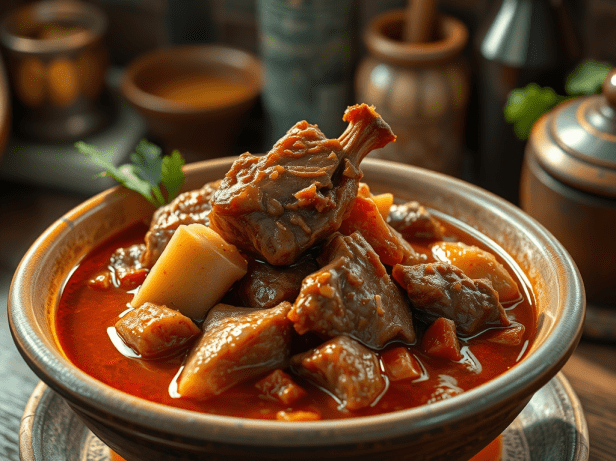
Cuban culinary customs differ from region to region, but these varieties were destroyed. The ajiaco camagüeyano, for instance, included not only beef but also duck breasts in its preparation. The true ajiaco–which genuinely deserved to be considered the national dish as a Caribbean fusion of the Spanish olla podrida and the French pot-pourri— was mercilessly destroyed and replaced by a very poor caldosa.
The worst thing, however, is the dirty work carried out by the mass media and political propaganda that contributed to the loss of information and cultural values that, driven by official policy, have convinced many that, in fact, Cuban gastronomy has always been extremely poor in variety.
Today, the country’s failed tourism industry and even many private restaurants live with their backs turned to what was once Cuba’s authentic culinary cultural heritage. The diaspora has managed to preserve valuable culinary traditions, and mention should be made of the legendary Pérez-Sosa bakery in these ongoing efforts along with many Cuban food restaurants around the world.
But the void of culinary tradition on the starving island, reduced to oblivion, is a real challenge for any future.
 Akerunoticias