José Miguel Garofalo recalls, in his own way, the article by Cuban writer Lisandro Otero, «Isaac Babel: A Literary Genius Ahead of His Time.»
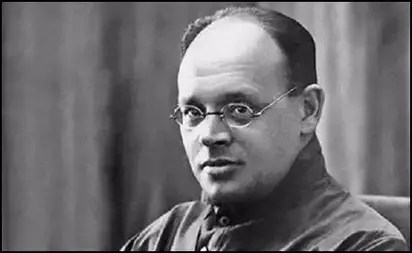
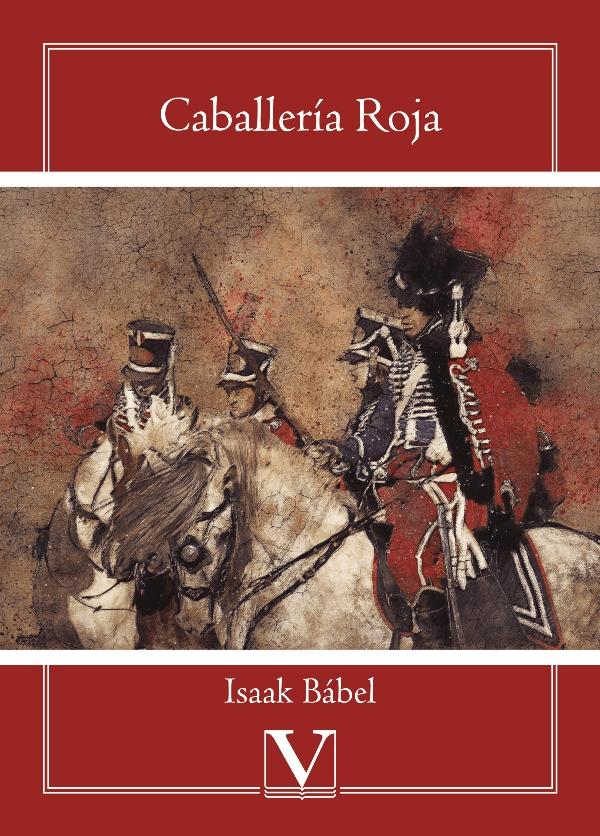
No Soviet writer suffered the contradictions between political power and the shortcomings of the ongoing utopia as intensely as Isaac Babel. His seminal book, «Red Cavalry,» was published in 1925, following his experience in General Semyon Budyonny’s First Cossack Regiment, which he joined in 1920.
However, his literary journey began in 1916 when he started contributing to the literary magazine «Letopis,» directed by Gorky, who became his initial mentor and political protector.
Babel learned to write succinctly, condensing his experiences into well-balanced capsules.
Each of his stories was rewritten time and time again. He even reworked some of them up to a hundred times. He was passionate about his craft. He confessed that when he couldn’t perfect a sentence, he would experience heart palpitations. A passage of five hundred or a thousand words could take him up to a month to complete. Writing was as agonizing for him as scaling a sharp escarpment, he confessed to Paustosky, gaining every meter through a laborious ascent.
Babel told his colleague and friend that he had no imagination, he was incapable of inventing anything; he needed authenticity, he had to draw from real incidents that he would then transform. He witnessed extreme situations of human behavior and faithfully captured them to later turn them into literature. His special knack lay in knowing how to appropriately select his life samples.
From the very beginning, after the Revolution, Babel collaborated as a propagandist for ROSTA, the State news agency, which later became TASS, and for the Red Army newspaper. He was a collaborator of the Cheka and a personal friend of the bloodthirsty Yagoda. When Mandelstam reproached him for this attitude, he said he wished to be close to the «smell of death.»
In 1928, Budyonny accused him of lying about the Cossacks of the First Regiment. «Distortions of an erotomaniac author,» was one of the charges, «small bourgeois vision»… ravings of a demented Jew,» he was accused. According to Budyonny, he never saw combat, always remaining in the rear.
Once again, Gorky’s defense managed to extend a cloak of immunity, but from then on, Babel entered into an almost total silence, which he briefly emerged from in 1934, during the First Congress of Soviet Writers, where he delivered a eulogy to Stalin in one of the sessions.
In 1935, he dared to write a play, «Mariya,» which was denounced and withdrawn from theaters. He worked on a film script with Eisenstein, which failed to pass censorship, leading to the abandonment of the project. However, Babel continued to travel within Russia and wrote stories that went unpublished. Gorky always protected him, but upon Gorky’s death in 1936, Babel knew that the toughest times were beginning for him.
In May 1939, he was arrested at his villa in Peredelkino, the writers’ village. He asked Antonina to inform his friend André Malraux about what was happening. One of the accusations was spying for French intelligence, for which he had supposedly been recruited by Malraux. It is now known that fifteen manuscripts and eighteen notebooks were confiscated and lost forever, including a completed novel, «Kolya Topuz,» and a book of stories ready to be published: «New Tales.»
Already in prison, he tried to gain indulgences by requesting permission to write a novel in which he would describe «the path that led him to commit crimes against the Soviet state.» Babel was confined to a cell in the Lubyanka where he was made to confess that he had come into contact with Trotskyists during his travels abroad and that he felt attracted to the enemies of his country. He also claimed that his work «Red Cavalry» was an expression of a state of mind and not «what was happening in the Soviet Union,» hence its emphasis on the cruelty of the Civil War.
He also confessed to providing information to André Malraux about agricultural collectivization. Finally, he admitted to having knowledge of a plot to assassinate Stalin and Voroshilov.
Isaac Babel’s trial took place on January 26, 1940, in Laurenti Beria’s office, Yagoda’s successor. It lasted twenty minutes. From the now-known records, it is known that his last words were: «I am not a spy. I never allowed any action against the Soviet Union. I falsely accused myself and was forced to accuse others. I only ask for one thing: let me finish my work!» He was executed at 1:30 a.m.
Your gift may be in my store


Connect with Akerunoticias, a newspaper that arrives with a selection of the most interesting content of the moment. It doesn’t matter if you live anywhere else on the planet, receive links to the most relevant news of the moment in your email inbox. Subscribe to our YouTube channel and enable notifications, and follow us on Facebook, Twitter and Instagram.
We also invite you to visit the CLUB DEL CREATIVO ONLINE

Their articles will guide you in the real and effective way to make your online business WORK. Join the CLUB. Subscribe and receive FREE documents, ebooks, support, tutorials, and access to conferences. If you subscribed and haven’t received the bonus gift, remind us through the CONTACT FORM.
 Akerunoticias