Roberto Méndez Martínez, poet, essayist, and academic.
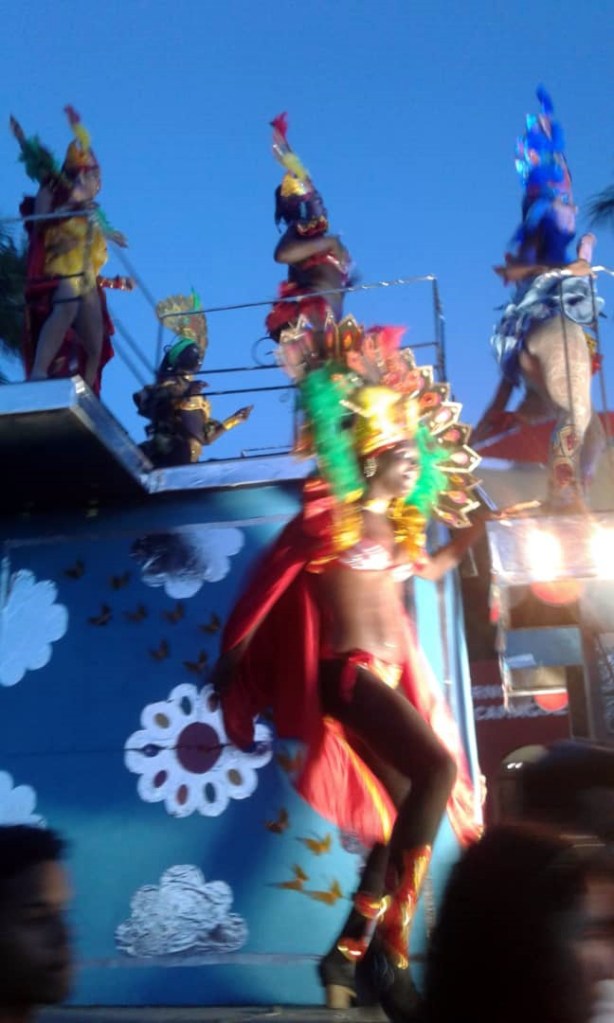
The San Juan celebration was an old tradition in Puerto Principe that some trace back to the 18th century, while others believe it to be much older. In the spring, after concluding the cattle transactions, the main economic activity in the region, landowners, encomenderos, laborers, and idle individuals dedicated themselves to rustic celebrations, marking the end of a work cycle. Despite its generic name, it was not a religious festival but a secular one, positioned between the Catholic celebrations of St. John the Baptist (June 24) and St. Peter (June 29), although often lasting longer. Cattle ranchers would enter the town, showcasing their horsemanship skills. It was common for them to enter through a road known since then as Calle del San Juan or de las Carreras[1]. Once in the town, they engaged in tournaments, dances, rides, picnics, and «assaults» or visits that served as pretexts for abundant dinners. The most common disguise was that of a «mamarracho,» which simply consisted of covering the body with mats or palm leaves and painting or soiling the face with red ochre or charcoal.
Gaspar Betancourt Cisneros (El Lugareño), in his interesting article «San Juan in Puerto Principe,» published in El Aguinaldo Habanero[2], describes these elemental celebrations:
In June, we are already in the middle of the rainy season. At this time, our rural people spend a lot of time on horseback. It is the opportune time to gather, graze, corral, count, and prepare the cattle. The cowboys from neighboring estates come together, assisting each other in the tasks of herding, gathering, corralling, branding, and marking the livestock. Thus, a group is formed that runs, shouts, sings, provokes, challenges, encourages horse races, skill, and equestrian agility. This, to me, is the origin of San Juan and the choice of the season. This practice transitioned from the countryside to the vicinity and later to the city itself, preserving some traces of its origins. As you will see, the imitation of rural activities became part of the city’s entertainment [3].
The diversions seemed to revolve around horse races, jokes, and ridicule aimed at people from all social classes:
It was all about jumping out of bed, having breakfast or not, going to the stable or courtyard, saddling the horse, going out on the street for races, shouting wildly, provoking onlookers, inviting them, taking them along, mocking the old ladies, exchanging witty remarks, insulting the ugly, the foolish, the plebeian… The truth is that the usual phrases and expressions were the coarsest, and sometimes obscene, and our good grandparents would utter, hear, and celebrate them as a joke from Don Quixote’s squire [4].
Another custom of those times was the «hunt for the boar,» in which individuals disguised as hunters chased another person playing the role of the «boar,» not only through the streets of the town but also inside any house they found open, sometimes resulting in disorderly situations that occasionally turned violent.
The atmosphere became slightly more refined in the afternoon, around four o’clock, when ladies and gentlemen would go on horseback rides. Everyone – ladies, riders, and horses – aimed for elegance in their adornments. At night, dances were held in the homes of prominent neighbors or in certain neighborhoods, decorated with branches and illuminated with torches.
The festivities were officially suspended by the authorities in 1817, under the pretext that they led to insults and personal outrages. However, influential people from Puerto Principe petitioned the Madrid Court in protest, and they were reinstated in 1835. While the matter was being resolved, some townspeople who couldn’t attend the court or the Captain General’s office decided to celebrate San Juan on their own. They needed an easy-to-wear and quick-to-disappear disguise in case they encountered a police officer. The rebels came up with a very ingenious solution. El Lugareño vividly explains how the «ensabanados» (people dressed in sheets) emerged, which would become one of the most peculiar elements of these celebrations:
Fearful that masked disguises at night could disrupt public order or lead to unfortunate incidents, the government prohibited masking. However, the people, always eager for their entertainment and accustomed to celebrating San Juan at night, found a clever way to circumvent the ban. They used bedsheets, tablecloths, curtains, and any linen they could find. A bedsheet or bedspread can cover a person from head to toe; it is a portable item that can be quickly hung on the arm like a towel taken to the river or a laundress’s house, leaving the person in their everyday clothes and amusingly defying the prohibition [5].
For these modern times, an official route was established for carriage rides. An edict from that time indicated: «follow the path from the Parish Church to the San Juan de Dios Hospital, from there to the San Francisco Convent, then to the Soledad Parish, proceed to the Mercedes Convent, and return to the starting point.» Gradually, the diversions became more refined under the influence of European carnival, with historical or fictional-themed comparsas (groups in costume).
Throughout the 19th century, the San Juan festival served as a barometer of the culture in Puerto Principe; its positive and negative aspects reflected the social structure surrounding the enlightened patriciate. Hence, a certain enlightened and exclusive conception of these festivities reached its peak between 1835 and 1868, only to disappear later along with the socio-economic foundations that supported them, although their more popular side left some enduring elements to this day. The development of music, dance, literature, as well as culinary art and fashion in that century contributed a distinctive character to these celebrations. Additionally, prominent figures of the principeño culture, such as Gaspar Betancourt Cisneros (El Lugareño), Salvador Cisneros Betancourt, Esteban Borrero Echeverría, Eva and Sofía Adán, participated as entertainers and protagonists. Originally arising with a strong rural character derived from the role played by cattle farming in the region, the San Juan festival had a period during which the creole elite turned it into part of the enlightened utopia. However, its survival, marked by these two diverse aspects, was mainly due to its status as popular festivities fulfilling the role of Carnival in other parts of Camagüey. As Salvador Cisneros Betancourt wrote years later:
«Camagüey in those days was an insane asylum: the population went crazy and formed a single family; they treated each other with such confidence and spontaneity, as if dealing with a population of over 30,000 souls had not been possible. In those days of such great jubilation, it was rare for anyone to eat at home, because the transformed people, united as one household, served their tables, inviting the first arrivals with exquisite delicacies. The main streets were filled with all kinds of carriages for the comparsas that paraded on those days. All sorts of decent sayings and jokes were allowed without anyone taking offense. [6]»
However, despite the new freedoms, the ensabanados had come to stay, and for over a century, they invaded the streets of Puerto Principe with their scares and pranks, no more refined than those of the old «mamarrachos.» The mere mention of them made Don Domingo del Monte’s hair stand on end, who wrote a few years later, citing as examples of the rusticity of principeño life those festivals where «even today, a dirty sheet, bedspread, or tablecloth replaces masks and Carnival Sundays on the days of San Juan and San Pedro, and people walk around wrapped in sheets through the streets and squares like madmen or patients who have fled a hospital.».[7]
- Today Avellaneda.
- The Habanero Christmas Bonus, 1837. Clipping without day and month.
- Ibidem.
- Ibidem.
- The Habanero Christmas Bonus, 1837. Ibid.
- Salvador Cisneros: «Bembeta-Pazo Incident». In: Cuba Libre, Havana, no. 37, 1902, n/p.
- Domingo Del Monte: «Intellectual Movement in Puerto Príncipe». In: Writings. Havana. Collection of Cuban Books. Cultural, S.A., 1929, vol. II, p.77-78.
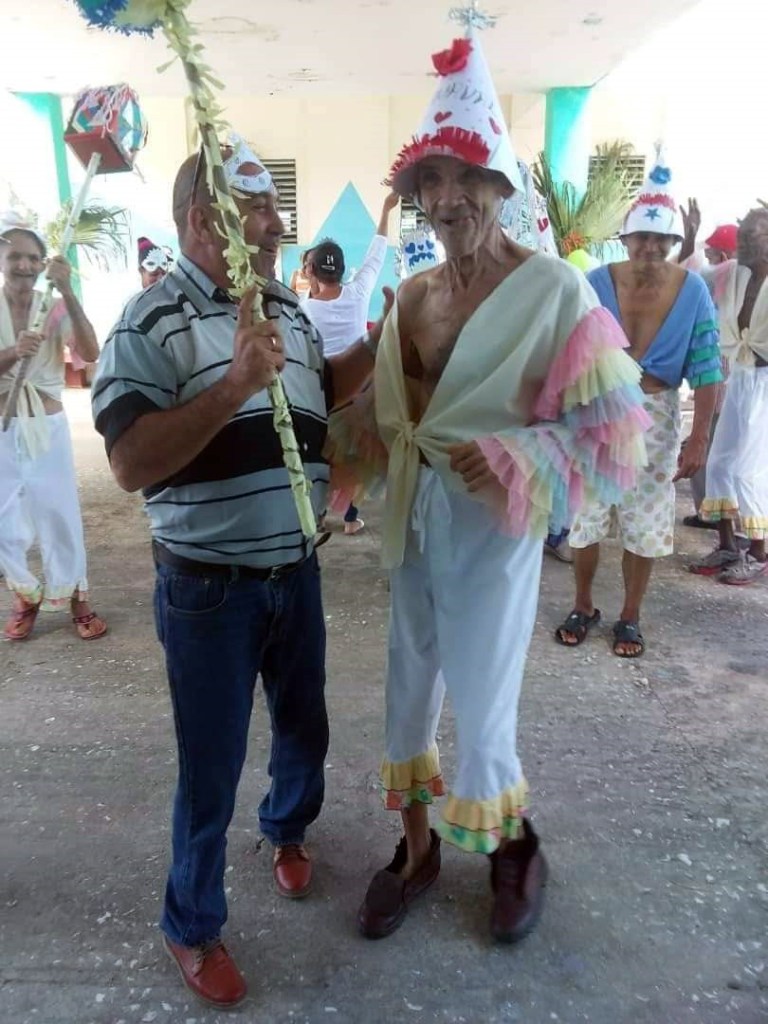
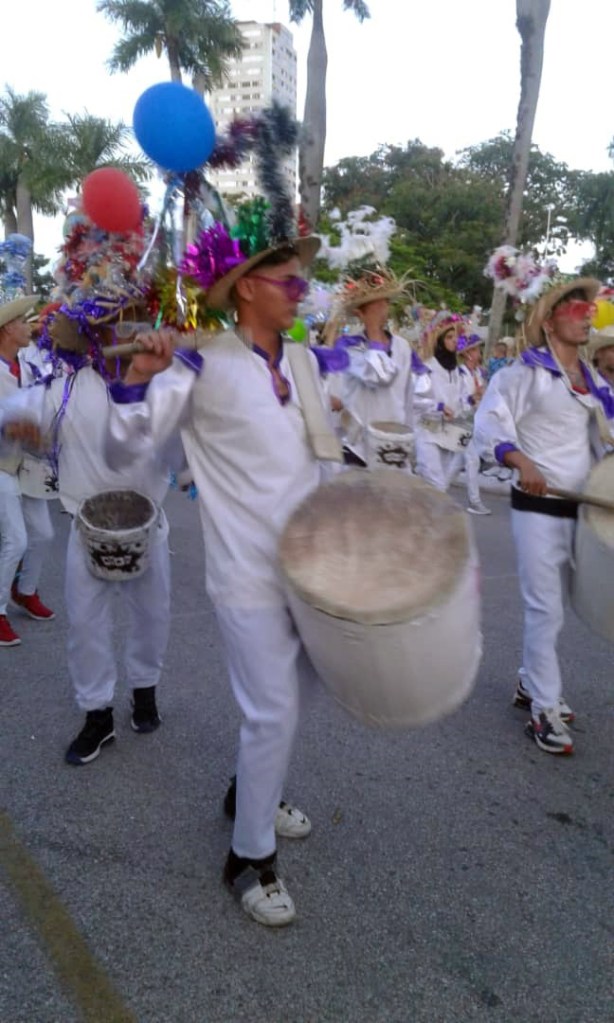
San Juan festivities in Camaguey 2023 – Photos by René Rodríguez Milián.
 Akerunoticias