On the world stage, where the decisions of two or three men affect the lives of millions, strategy is everything. Three key figures emerge in today’s geopolitical chess game: Volodymyr Zelensky, Donald Trump, and Vladimir Putin. Each represents an archetype: the politician caught between a rock and a hard place, the tough negotiator, and the iron-fisted leader clinging to his vision of sovereignty.
Raysa White

Volodymyr Zelensky, the comedian turned president, finds himself on a board where the pieces move with speed and surgical precision. Every move defines his country’s fate, and history does not forgive mistakes. Now, faced with Donald Trump’s proposal to share 50% of Ukraine’s rare earth business with the United States, Zelensky hesitates, holding on to a resistance that could well be his Achilles’ heel.
In high-level politics, pragmatism is an art. Why not negotiate with the U.S.? The infrastructure to exploit these resources will not come from nowhere; it will be built by Americans. And when Washington’s money is at stake, its military becomes a guarantee of protection. It’s not about giving up sovereignty—it’s about playing intelligently with the cards on the table.
Meanwhile, Russia continues its brute-force logic. Since the 18th century, when Catherine the Great seized Crimea from Ukraine, Moscow has treated its neighbor as an extension of itself. The Holodomor left a trail of death. The Chernobyl disaster remains an open wound. These events illustrate the extent of this imposed subjugation. No matter how many interests and justifications Putin has, he fails to grasp that Ukraine does not want to be a satellite. Ukraine wants to be an independent player on the global stage.
Let’s not forget that, in another corner of the board, Recep Tayyip Erdoğan enters the scene. If Zelensky had nothing to offer, why would Erdoğan meet with him? Turkey, always playing its own geopolitical game, knows that Ukrainian weakness presents an opportunity. And so, a question arises that few dare to ask: Is there an unexpected move in the region? Could this move tip the balance of power?
If Ukraine shifts toward Turkey and Russia stays its course, will the so-called domino effect be triggered?
A new realignment of power could create opportunities for certain actors to use the cracks in the conflict to their advantage. And in this scenario, an uninvited guest would surely appear—Nicolás Maduro, the one who always invites himself in.
Donald Trump, above all, is a businessman. His primary goal is to make America great again. That means no spending, no wars. His offer to share the rare earth business is not an irresistible proposal, nor is it an act of generosity. It’s a strategic move—but one that presents an opportunity for dialogue on favorable terms.
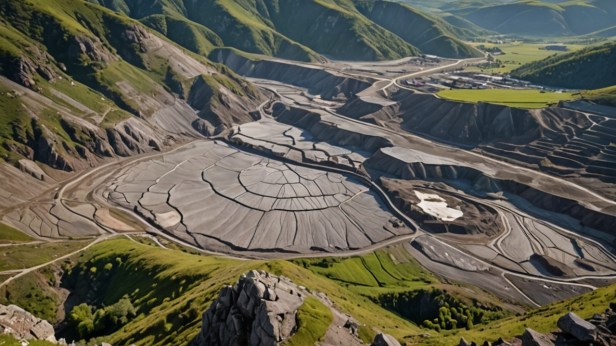
Ukraine is a key territory for the exploitation of these critical resources, essential for emerging technologies. Trump has in his hands a masterstroke he cannot afford to waste: redefining his influence in a vital region.
Zelensky has doors opening before him.
Geopolitics is not an exact science. The proof? A drunk who fancies himself a philosopher could write an entire treatise while downing vodka. But geopolitics can be a game where decisions shape destinies.
Zelensky still has cards to play. And he is not a dictator, as Donald Trump claims. He is a leader who listens. Whether his legacy will be that of a strategist or a martyr depends on whether he understands something crucial: In this chess game, hesitation comes at a high price. Opportunities don’t knock twice.
 Akerunoticias